Rethinking the Fused Spine: How Regenerative Medicine Is Giving Canadian Chronic Pain Patients a Life Beyond Surgery
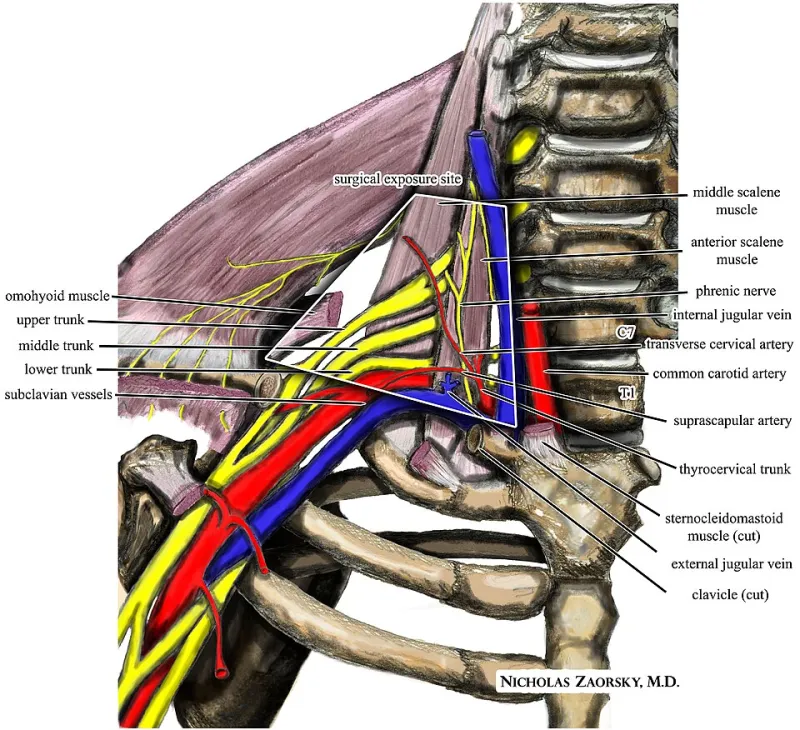
Photo: Nicholas Zaorsky, M.D., CC BY-SA 3.0, via Wikimedia Commons
For many Canadians, chronic spinal pain is not merely a physical condition — it is a life sentence. It reshapes careers, disrupts relationships, and steadily erodes the quality of daily existence. When conservative treatments such as physiotherapy, epidural injections, and pain management protocols reach their limits, surgeons frequently recommend spinal fusion: a procedure that permanently joins two or more vertebrae, eliminating movement at the affected segment in exchange for structural stability.
Yet a meaningful and growing segment of Canadian patients is now asking a different question — not when to schedule fusion surgery, but whether it is truly necessary at all.
The Problem with Permanent
Spinal fusion is a well-established procedure, and for certain acute structural conditions it remains appropriate. However, the surgical literature has long acknowledged its limitations. Studies published in peer-reviewed orthopaedic journals indicate that a significant proportion of fusion patients continue to experience chronic pain following surgery, a phenomenon so common it has acquired its own clinical designation: failed back surgery syndrome.
Beyond the risk of persistent pain, fusion permanently alters spinal biomechanics. By eliminating motion at one segment, the procedure transfers mechanical stress to adjacent vertebrae — a process known as adjacent segment disease — which frequently accelerates degeneration at neighbouring levels. For younger patients or those with multi-level disc involvement, this creates a troubling cascade that can lead to repeat surgeries over time.
For many Canadian patients navigating months-long waitlists within the public healthcare system, the prospect of undergoing a permanent, irreversible procedure — only to face further degeneration — is prompting serious re-evaluation.
What Stem Cell Therapy Offers the Spine
Regenerative medicine approaches spinal degeneration from a fundamentally different premise. Rather than mechanically stabilising a damaged segment, stem cell therapy attempts to restore the biological integrity of the tissue itself.
The intervertebral disc — the cartilaginous structure that cushions vertebrae and absorbs mechanical load — is largely avascular, meaning it receives minimal direct blood supply. This limited circulation is one reason disc tissue heals so poorly on its own. Mesenchymal stem cells (MSCs), typically harvested from a patient's own bone marrow or adipose tissue, possess the capacity to differentiate into disc-relevant cell types, including nucleus pulposus cells, which form the gelatinous interior of the disc.
When introduced into the affected disc under imaging guidance, these cells can stimulate proteoglycan synthesis — the process by which the disc rebuilds its water-retaining matrix — while simultaneously modulating the inflammatory environment that perpetuates pain signalling. Clinical studies and emerging trial data suggest that well-selected patients can experience measurable improvements in disc height, pain scores, and functional mobility following intradiscal stem cell procedures.
At Stem Cell Jamaica, treatment protocols are tailored to the specific pathology of each patient. Candidates undergo thorough pre-treatment imaging and clinical assessment to determine whether their condition — whether degenerative disc disease, herniation, or facet-related pain — is appropriately suited to regenerative intervention.
Canadian Patients Speak: Choosing Regeneration Over Fusion
David R., a 54-year-old civil engineer from Calgary, had been managing L4-L5 disc degeneration for nearly four years when his orthopaedic surgeon recommended fusion. "I wasn't opposed to surgery in principle," he explains, "but I was deeply concerned about what it would mean for my mobility long-term. My work requires me to be on-site, moving around. A fused segment felt like trading one problem for another."
After researching regenerative options and consulting with the clinical team at Stem Cell Jamaica, David underwent a minimally invasive intradiscal stem cell procedure combined with platelet-rich plasma (PRP) therapy. Within six months, he reported a significant reduction in radicular symptoms and returned to full professional duties without surgical intervention.
Similarly, Sandra M., a 47-year-old nurse practitioner from Mississauga, had been facing cervical disc herniation at two levels. "The Canadian system is excellent, but my wait for a specialist consultation was already at eight months," she notes. "I couldn't afford to lose more time, and I certainly couldn't afford to lose the use of my hands." Following treatment in Jamaica, Sandra avoided surgery and credits her recovery to the combination of targeted cellular therapy and the comprehensive post-treatment rehabilitation guidance provided by the clinical team.
Addressing Common Misconceptions
Scepticism about stem cell therapy is understandable and, in many cases, warranted. The regenerative medicine field has not been without its share of unscrupulous providers making unsupportable claims. It is precisely for this reason that patient education is central to the philosophy at Stem Cell Jamaica.
"Is this experimental?" Mesenchymal stem cell therapy for musculoskeletal conditions is supported by a substantial and growing body of peer-reviewed research. While regulatory approvals vary by jurisdiction, the scientific foundation for autologous (patient-derived) stem cell procedures is well-established, and the safety profile of these approaches compares favourably to surgical alternatives.
"Will it work for everyone?" No responsible clinician would suggest otherwise. Patient selection is critical. Individuals with severe structural instability, significant spinal cord compression, or other acute surgical indications may not be appropriate candidates for regenerative-first approaches. The clinical team at Stem Cell Jamaica conducts rigorous pre-treatment evaluations precisely to ensure that recommended therapies align with each patient's actual pathology.
"Is it safe to travel for this treatment?" Jamaica's healthcare infrastructure has developed considerably in recent decades, and Stem Cell Jamaica operates within internationally recognised standards of clinical care. Canadian patients benefit from the proximity of the island — a direct flight from Toronto, Montreal, or Vancouver is typically under five hours — making treatment-related travel manageable even for patients with compromised mobility.
A Different Calculus for Chronic Pain
The decision to pursue spinal fusion or explore regenerative alternatives is not one that any patient should make hastily or without thorough clinical guidance. What has changed, however, is the range of credible options available.
For Canadian patients who have exhausted conservative treatment, face protracted surgical waitlists, or are simply unwilling to accept permanent spinal alteration as their only recourse, stem cell therapy represents a scientifically grounded and increasingly accessible alternative. The question is no longer whether regenerative medicine can play a role in spinal health — it is whether patients and their physicians are prepared to have that conversation.
At Stem Cell Jamaica, that conversation begins with a commitment to transparency, evidence-based practice, and personalised care. We invite Canadian patients navigating this difficult terrain to connect with our clinical team and explore what regenerative medicine may offer their specific situation.