Age Is Not a Diagnosis: How Regenerative Medicine Is Rewriting the Rules for Older Canadian Patients
For much of the twentieth century, a patient's age functioned as an informal gatekeeper in Canadian medicine. Surgeons weighed anaesthetic risk against expected recovery timelines. Specialists calculated whether the probable benefits of an intervention would outlast the patient's remaining productive years. The unspoken arithmetic was rarely discussed openly, but it shaped clinical decisions in ways that millions of older Canadians felt acutely—particularly those living with degenerative joint disease, neurological decline, or chronic musculoskeletal conditions.
That arithmetic is now being questioned, not by activists or advocacy groups, but by the biology of regenerative medicine itself.
What Biological Age Actually Measures
Chronological age counts years. Biological age measures the functional condition of tissues, cells, and organ systems. The distinction matters enormously in the context of stem cell therapy, where the primary variable governing treatment success is not how long a patient has been alive, but how responsive their cellular environment remains.
Researchers studying mesenchymal stem cells—the class most commonly employed in musculoskeletal and anti-inflammatory regenerative protocols—have found that cellular responsiveness varies far more between individuals than it does between age cohorts. A 72-year-old with well-managed metabolic health, low systemic inflammation, and no history of immunosuppressive drug use may present a more favourable regenerative environment than a 54-year-old with poorly controlled diabetes and chronic corticosteroid exposure.
This insight is gradually permeating clinical thinking, though Canadian public health infrastructure has been slow to reflect it. Publicly funded programmes still rely heavily on age thresholds when triaging patients for orthopaedic procedures, rehabilitation services, and specialist referrals. The result is a cohort of older Canadians who have been systematically excluded from conversations about advanced treatment options—not because their biology disqualifies them, but because the system was not designed to look beyond the calendar.
Physicians Are Updating Their Frameworks
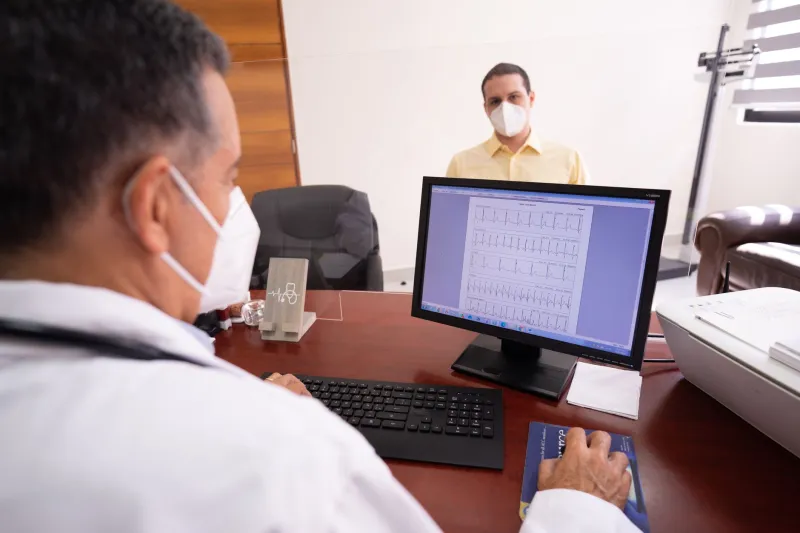
Clinicians who have begun integrating regenerative medicine into their practice describe a meaningful shift in how they assess patient candidacy. Rather than leading with age, they now prioritise a more granular biological profile: inflammatory markers, tissue quality on imaging, metabolic panel results, and the patient's history with pharmaceuticals known to impair cellular healing.
One Canadian physician who refers patients to regenerative medicine clinics in the Caribbean noted that the most surprising outcomes in his experience have often involved patients he would once have considered marginal candidates. He described a retired schoolteacher from British Columbia, 74 years old, who had been waiting nearly two years for a knee replacement. Her surgical team had expressed reservations about the procedure given her age and mild cardiac history. Following a consultation that included a thorough biological assessment, she underwent a stem cell protocol at a Caribbean regenerative clinic. Within several months, her functional mobility had improved sufficiently that she no longer appeared on the surgical waitlist.
"What struck me," the physician observed, "was that her biology was considerably younger than her file suggested. She had maintained an active lifestyle, avoided long-term NSAID use, and had no significant inflammatory burden. The cellular environment was simply more receptive than the age category implied."
The Compounding Problem of Delayed Care
The consequences of age-based exclusion are not merely philosophical. In practical terms, older Canadian patients who are deemed poor candidates for aggressive intervention are frequently managed with a combination of pain medication, physiotherapy, and watchful waiting. This approach, while conservative, carries its own biological costs.
Prolonged inflammation degrades cartilage and connective tissue progressively. Reduced mobility accelerates muscle atrophy and diminishes the quality of the joint environment over time. Patients who might have responded well to regenerative intervention at 68 may find their biological window has narrowed considerably by 73—not because of age per se, but because of the cumulative damage that unmanaged degeneration inflicts during the intervening years.
This is one of the more counterintuitive arguments for early regenerative intervention in older patients: waiting does not preserve options. It consumes them.
What Patients in Their 70s Are Reporting
Anecdotal evidence from patients who have pursued stem cell therapy later in life paints a picture that contradicts the conventional narrative of diminishing returns with age.
A 68-year-old retired engineer from Ontario, who had been managing bilateral hip pain for seven years, travelled to Jamaica for a regenerative consultation after his orthopaedic surgeon indicated that his age and bone density made him a suboptimal surgical candidate. Following a personalised stem cell protocol, he reported a gradual but sustained reduction in pain levels and a return to activities—including recreational golf and light hiking—that he had abandoned years earlier.
A 71-year-old woman from Alberta, living with early-stage rheumatoid arthritis that had not responded adequately to first-line disease-modifying drugs, sought regenerative therapy after reading about mesenchymal stem cell applications in autoimmune conditions. Her physician had initially expressed scepticism, citing her age and the complexity of her immune profile. The outcomes, she reported, exceeded her expectations—not in terms of complete remission, but in meaningful reductions in flare frequency and joint stiffness that allowed her to reduce her medication burden under medical supervision.
These are individual accounts, not clinical trial data. But they reflect a pattern that regenerative medicine practitioners are observing with increasing frequency: older patients, properly selected on biological rather than chronological criteria, are achieving results that conventional medicine had not anticipated.
The Role of a Thorough Pre-Treatment Assessment
The key differentiator in successful outcomes for older patients is not the therapy alone—it is the quality of the assessment that precedes it. Reputable regenerative medicine clinics conduct comprehensive biological evaluations before designing a treatment protocol. These assessments examine inflammatory status, tissue viability, metabolic function, medication history, and lifestyle factors that influence cellular responsiveness.
At Stem Cell Jamaica, this evaluation process is central to how patient candidacy is determined. Age is considered as one data point among many, not as a primary qualifier or disqualifier. The clinical team works to understand each patient's biological reality before making any recommendations, a process that has revealed regenerative potential in patients who arrived expecting to be turned away.
A Different Conversation About Ageing
What regenerative medicine is ultimately offering older Canadian patients is not a fountain of youth or a reversal of time. It is a more honest and scientifically grounded conversation about what their bodies are actually capable of—as opposed to what a demographic category suggests they should expect.
For Canadians who have spent years navigating a public health system that moves slowly and thinks in population averages, the prospect of individualised biological assessment is itself a meaningful departure. The question is no longer simply "how old are you?" It is "what is your biology doing, and what can we work with?"
In that reframing lies the quiet revolution that regenerative medicine is bringing to older patients across Canada—and the reason so many of them are increasingly willing to travel to find it.