Where Bush Medicine Meets Biotechnology: Jamaica's Healing Heritage and the New Science of Repair
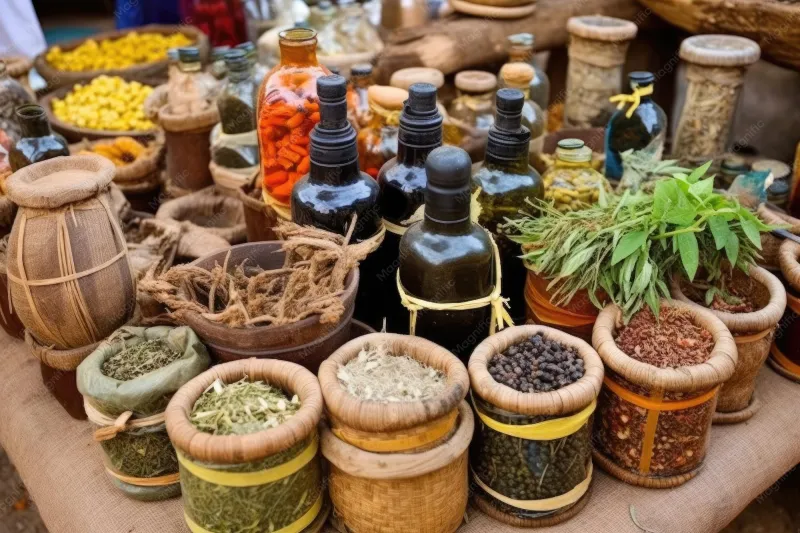
Photo: herbal remedies bottles Caribbean traditional medicine market, via img.freepik.com
Ask any Jamaican grandmother and she will have a remedy: fever grass tea for a cold, aloe for a burn, sarsaparilla for strength. Bush medicine—knowledge carried across the Middle Passage and blended with Indigenous Taíno and Indian traditions—has been the island's primary healthcare for centuries. It would be easy to treat this heritage as a charming footnote to the arrival of high-tech medicine in Kingston. That would be a mistake. The philosophy embedded in Jamaican healing tradition has more in common with modern regenerative science than patients from northern climates might expect.
Healing From Within, Not Against
The central premise of bush medicine is that the body, given the right support, can restore itself. Herbs do not replace a broken bone; they create conditions in which the body mends. Compare that with regenerative medicine's founding insight: that stem cells and growth factors can be deployed to amplify the body's own repair mechanisms. Both traditions reject the purely mechanical view of the body—the idea that the only answer to a worn joint is to remove and replace it. Both ask, first, what can be stimulated, supported, and renewed.
This is not to pretend equivalence. Herbal remedies lack the rigorous clinical evidence that governs legitimate cell-based therapies, and patients should never substitute one for the other. But the shared worldview matters culturally. It shapes how care is delivered on the island: conversationally, holistically, and with attention to the whole person rather than the isolated joint.
The Community Model of Care
Traditional Jamaican healing was never transactional. The bush doctor knew the family; treatment came with food, rest, and expectation of return visits. Modern medical tourism often strips care down to a procedure and a plane ticket. Clinics rooted in Caribbean culture can offer something different—unhurried consultations, continuity of contact during recovery weeks, and an environment where patients are guests rather than case numbers.
For Canadians accustomed to seven-minute appointments and hallway medicine, this rhythm is often reported as the most surprising element of treatment abroad. The slower pace is not inefficiency; it reflects a cultural conviction that healing requires time and relationship—precisely the conditions under which regenerating tissue does its work.
Climate, Calm, and the Biology of Recovery
There is also a literal environmental argument. Recovery from any regenerative procedure benefits from sleep, gentle movement, sunlight, and reduced stress. Jamaica offers all four in abundance. A patient spending three weeks walking on warm sand, eating fresh food, and sleeping without an alarm is not on vacation from their recovery—they are practising it. The island's restorative character is not incidental to the treatment; it is part of the therapeutic context.
Old Wisdom, New Biology
None of this means regenerative medicine should be romanticised. It is a clinical discipline, subject to evidence, and patients must apply the same scrutiny to clinics in Kingston as they would in Toronto. But there is a genuine argument that Jamaica's location is an advantage beyond geography: a place where a heritage of self-repair meets a science of self-repair, and where patients from cold climates can pursue cutting-edge treatment in surroundings that actively support convalescence.
The grandmother with her fever grass and the researcher with their cell culture are, in a sense, working on the same problem from opposite ends of the timeline. Patients who come to Jamaica for regenerative therapy encounter both—the oldest healing culture in their itinerary and the newest. That combination is rare, and it is worth understanding before you book the flight.