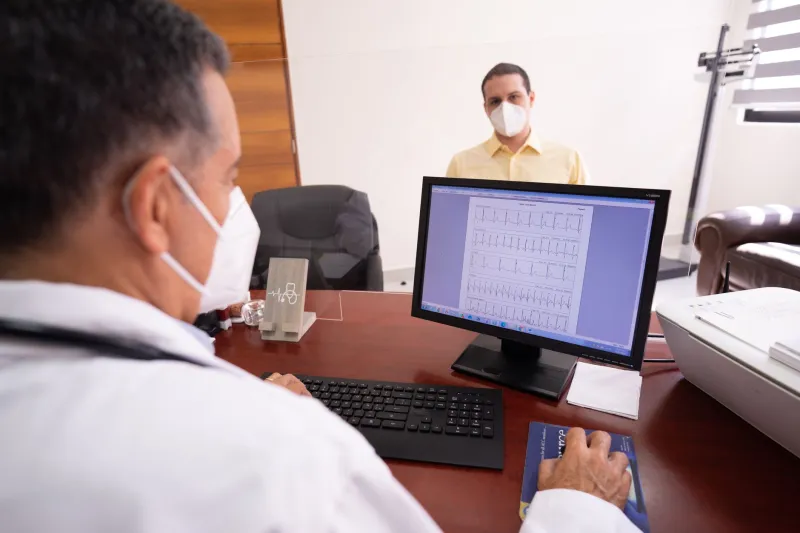
The Conversation Your Canadian Doctor Is Avoiding—And Why You Need to Start It Yourself

There is a particular kind of frustration that settles in after a medical appointment where nothing new was offered. You described your pain, your limitations, your diminishing quality of life—and you left with the same prescription, the same referral, the same instruction to return in six months. What you were not told, and what your physician may have deliberately avoided discussing, is that a parallel body of clinical knowledge exists. One that is reshaping how degenerative and inflammatory conditions are treated in countries across the globe. That knowledge is called regenerative medicine, and in Canada, it remains almost entirely absent from the standard medical conversation.
This is not an accident. It is the predictable outcome of a healthcare system built around reimbursement structures, institutional conservatism, and a regulatory environment that moves far more slowly than the science it is meant to govern.
Why the Silence Exists
Canadian physicians operate within a framework that is simultaneously protective and limiting. The College of Physicians and Surgeons in each province establishes practice standards that physicians are professionally and legally obligated to follow. Recommending a therapy that has not received formal Health Canada approval—or that falls outside provincial funding guidelines—exposes a physician to scrutiny, even if that therapy is being studied in peer-reviewed journals and administered safely in accredited international clinics.
The result is a chilling effect on candid clinical conversation. A physician who privately finds the evidence for mesenchymal stem cell therapy compelling may nonetheless say nothing about it during your appointment, not because they believe it is ineffective, but because recommending it falls outside the boundaries of what they are institutionally sanctioned to suggest.
This dynamic is compounded by continuing medical education. Most CME programming available to Canadian practitioners is funded, directly or indirectly, by pharmaceutical manufacturers. Regenerative therapies—which are largely cell-based and not patentable in the conventional pharmaceutical sense—receive almost no representation in these educational channels. The practical consequence is that a significant portion of the Canadian physician workforce simply has not been exposed to the current state of regenerative research in any meaningful clinical depth.
What the Evidence Actually Shows
The clinical literature on stem cell therapies is not fringe science. Published studies in journals including The Lancet, Stem Cells Translational Medicine, and Arthritis & Rheumatology have documented measurable outcomes in conditions ranging from osteoarthritis and degenerative disc disease to autoimmune disorders and post-surgical recovery. Research originating from Canadian institutions—including the University of Toronto and McMaster University—has contributed to this growing foundation.
The irony is not lost on informed patients: Canadian scientists are producing the research that Canadian clinicians are discouraged from acting upon. The knowledge is being generated domestically; its clinical application is happening elsewhere.
At Stem Cell Jamaica, we regularly receive patients who arrive with thick folders of peer-reviewed literature they sourced themselves—literature their own physicians had never referenced during years of consultations. This pattern is not an outlier. It is the norm.
The Quiet Referral Network
What exists beneath the surface of official medical culture in Canada is a quiet, informal referral network. Physicians who are personally persuaded by the regenerative evidence—but who cannot formally recommend international treatment within their practice—find other ways to communicate. A comment in passing. A name mentioned carefully. A printed article left on a desk without explicit endorsement.
Several Canadian specialists, speaking in confidence, have described a version of the same scenario: a patient asks directly about stem cell therapy, and the physician responds with something measured but deliberate. "I can't refer you there officially, but I wouldn't discourage you from looking into it." That sentence, carefully constructed to stay within professional limits while still conveying genuine clinical opinion, has sent hundreds of Canadian patients toward regenerative consultations abroad.
The existence of this informal network tells you something important: the silence in the examination room is not the same as professional scepticism. In many cases, it is professional constraint masquerading as clinical neutrality.
How to Raise the Subject Without Being Dismissed
For patients who want a genuine conversation about regenerative options, the approach matters. Walking into an appointment and announcing that you want stem cell therapy is likely to generate defensiveness. A more effective strategy involves positioning the conversation as a request for information rather than a demand for a referral.
Consider these framing strategies:
Ask about the research, not the treatment. Begin by referencing a specific published study—ideally one from a Canadian institution or a peer-reviewed journal your physician would recognise. "I came across this paper on mesenchymal stem cell therapy for osteoarthritis from the University of Toronto. I'd be curious to hear your thoughts on the methodology." This positions you as an informed patient seeking dialogue, not a consumer pushing an agenda.
Separate the question of efficacy from the question of access. Acknowledge that you understand the therapy may not be available through provincial health coverage. Make clear that you are not asking your physician to prescribe something unavailable—you are asking them to help you understand whether the evidence warrants your exploring it through other channels.
Invite honesty about limitations. Ask directly: "Is there anything in your view of my condition that makes you think conventional treatment will be sufficient long-term?" This opens space for a more candid clinical assessment that may, in turn, create room for an honest discussion of alternatives.
Document the conversation. If your physician dismisses the topic without engaging with the evidence, note that in writing and follow up with a formal request for their clinical rationale. This is not adversarial—it is appropriate patient advocacy, and it signals that you are a patient who will not be passively managed.
The Role of an Independent Consultation
For many Canadian patients, the most productive step is to seek a consultation outside the provincial system entirely—not to bypass their primary physician, but to obtain an informed second opinion from a practitioner whose clinical framework is not constrained by the same institutional pressures.
At Stem Cell Jamaica, we offer thorough consultations that begin with a complete review of a patient's existing medical history, imaging, and prior treatment outcomes. Our clinical team can assess whether a patient's condition and overall health profile make them a suitable candidate for regenerative therapy, and can provide a detailed written summary that the patient may share with their Canadian physician if they choose.
This approach transforms the dynamic. Rather than asking a constrained Canadian physician to lead a conversation they are institutionally reluctant to have, the patient arrives at their next appointment already informed—with clinical documentation that invites engagement rather than demanding it.
A System That Serves Itself
It would be unfair to characterise every Canadian physician as indifferent to their patients' best interests. The majority entered medicine with genuine commitment to patient welfare. The system they practice within, however, was not designed with patient optionality as its primary value. It was designed around standardisation, liability management, and cost containment.
Regenerative medicine does not fit neatly into that framework—not yet. But the science does not wait for administrative convenience. Patients who understand this, and who take ownership of their own health information, are consistently better positioned to access the full spectrum of what modern medicine can offer.
You may not be able to make your Canadian physician initiate this conversation. But you can walk into their office prepared to have it yourself.